How to Put Volunteer Experience on a Resume: Examples and Tips
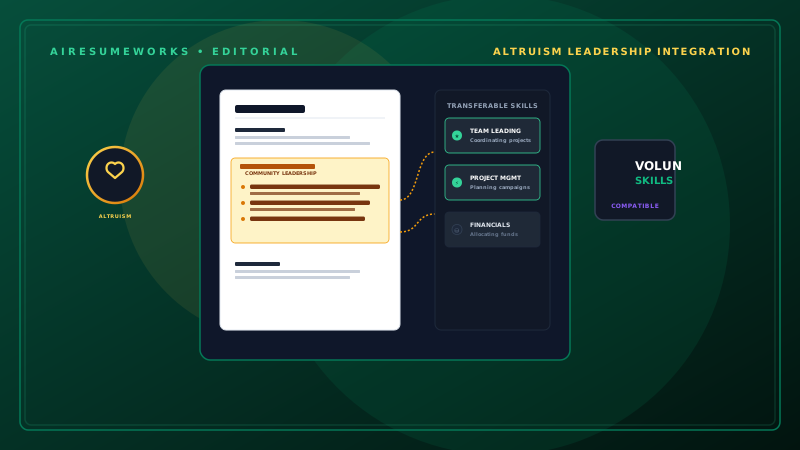
Volunteer experience can be valuable on a resume, especially when it demonstrates skills, responsibilities, leadership, or experience that relates to the position you want.
You do not need to have been paid for an activity for it to demonstrate useful professional skills. Volunteer work can show employers that you have experience working with people, organizing activities, solving problems, managing responsibilities, or contributing to a team.
The key is to present volunteer experience in the same professional way you would present relevant employment experience.
When Should You Include Volunteer Experience?
Volunteer experience can be particularly useful when:
You have limited professional experience You are applying for your first job You are changing careers You have a gap in your employment history Your volunteer work relates directly to the position You developed important skills through volunteering You held a leadership position You completed a significant volunteer project
You do not need to include every volunteer activity you have ever participated in. Focus on experiences that add value to your application.
Where Should Volunteer Experience Go?
There is no single correct location. You can create a dedicated section such as:
Volunteer Experience
or
Volunteer Experience & Community Involvement
For substantial volunteer work that is closely related to your target position, it may also make sense to include it within your main experience section.
For example, someone applying for a nonprofit management position might have significant volunteer management experience that deserves prominent placement.
Example of a Basic Volunteer Resume Entry
- Volunteer Coordinator — Community Food Bank
- Atlanta, GA | 2024–Present
Coordinate weekly volunteer schedules and assignments. Help organize food distribution activities. Communicate with volunteers regarding schedules and responsibilities. Assist with maintaining organized inventory and distribution areas.
This presentation makes the experience look like professional experience because it clearly explains what the person actually did.
Focus on Responsibilities
Simply writing:
Volunteer at local food bank. does not tell an employer very much. Instead, explain your responsibilities. For example:
Assisted customers during weekly food distribution events. Organized donated items for distribution. Helped train new volunteers. Maintained organized work areas. Communicated with community members and other volunteers.
The employer can then see the skills involved.
Focus on Accomplishments
Volunteer experience becomes even stronger when you can describe meaningful results. For example:
Helped organize monthly community food drives serving approximately 200 local families. Or:
Coordinated a team of 15 volunteers during weekly community outreach events. Specific details make the experience easier to understand. Only use numbers that are accurate.
Do not invent statistics simply to make a volunteer experience appear more impressive.
Volunteer Experience for Someone With No Work Experience
Volunteer work can be particularly valuable for someone creating a first resume. For example:
- Volunteer — Community Animal Shelter
- Atlanta, GA | 2025–Present
Assisted visitors with basic questions about animals and adoption procedures. Helped maintain clean and organized animal areas. Worked with staff and other volunteers to support daily shelter operations. Assisted with scheduled adoption events.
This can demonstrate:
- Customer service
- Communication
- Teamwork
- Organization
- Responsibility
Even without traditional employment, these experiences can demonstrate useful workplace skills.
Volunteer Experience for Students
Students can use volunteer activities to demonstrate skills they have developed outside of paid employment. For example:
Volunteer Tutor — Community Learning Center
Helped middle school students with basic mathematics and reading assignments. Prepared simple study materials. Communicated progress and concerns with program coordinators. Provided one-on-one assistance during weekly sessions.
This can demonstrate communication, organization, teaching, patience, and problem-solving abilities.
Volunteer Experience for Career Changers
Volunteer work can help career changers demonstrate experience related to a new field. Suppose someone worked in retail but wants to move into event planning.
They might have volunteered to organize community events. Instead of emphasizing only their retail background, they could highlight:
Volunteer Event Coordinator — Community Organization
Helped coordinate community events involving vendors, volunteers, and attendees. Assisted with scheduling and event logistics. Communicated with vendors regarding setup requirements. Helped resolve problems during events.
This provides evidence of transferable experience related to event planning.
Use Relevant Skills
When describing volunteer experience, think about the skills the employer is looking for. For example, a volunteer position might involve:
Leadership
- Coordinating volunteers
- Training new members
- Assigning responsibilities
Communication
- Speaking with visitors
- Answering questions
- Communicating with team members
Organization
- Scheduling
- Inventory management
- Event preparation
Technology
- Maintaining spreadsheets
- Managing email communications
- Updating databases
If these skills are relevant to the job you want, make them visible in your resume.
Match Volunteer Experience to the Job
Your resume should be tailored to the position you are applying for. Suppose you volunteered at a community center and performed many different tasks.
For an administrative job, you might emphasize:
- Scheduling
- Data entry
- Email communication
- Record keeping
- Organization
For a customer service position, you might emphasize:
- Helping visitors
- Answering questions
- Resolving problems
- Communication
The volunteer experience remains the same, but the most relevant aspects receive greater emphasis.
Use Strong Action Verbs
Avoid beginning every bullet with phrases such as:
Helped with... Instead, use specific action verbs when they accurately describe what you did. Examples include:
- Coordinated
- Organized
- Assisted
- Managed
- Trained
- Prepared
- Supported
- Communicated
- Scheduled
- Maintained
- Led
- Developed
- Presented
- Created
For example:
Weak:
Helped with volunteer scheduling. Stronger:
Coordinated weekly volunteer schedules and assignments. The stronger version provides a clearer picture of the responsibility.
Do Not Exaggerate Your Volunteer Role
Be accurate about your position. If you assisted a coordinator, do not describe yourself as the program director. If you participated in an event, do not claim that you organized the entire event unless you actually did.
Employers value credibility. Your goal is to present your actual contribution as clearly and professionally as possible.
Should You Include Volunteer Experience From Years Ago?
Older volunteer experience can still be useful when it is highly relevant. For example, if you are applying for a healthcare position and completed substantial healthcare-related volunteer work several years ago, it may still be worth including.
However, older and less relevant activities may not deserve valuable resume space. Consider:
How relevant is the experience? Does it demonstrate an important skill? Does it support your career direction? Is it more useful than another section you could include? Volunteer Experience Can Help Explain Employment Gaps
Volunteer work can sometimes provide useful context during periods when you were not employed. For example:
Volunteer Program Coordinator — Local Community Organization 2022–2023 Coordinated community outreach activities. Scheduled volunteers and maintained program records. Assisted with event planning and community communications.
This does not replace paid employment, but it shows that you remained active and developed useful skills. You do not need to use volunteer experience simply to hide an employment gap. Include it because it provides meaningful information about your background.
Where to Put Volunteer Experience on a Resume
The location depends on its importance. If volunteer experience is highly relevant, you might place it before education:
Professional Experience
Volunteer Experience
Education
If it is less central to your application, you might place it near the bottom:
Professional Experience
Education
Skills
Volunteer Experience
There is no requirement that every resume use the same order. Prioritize the information most useful to the employer.
Volunteer Work Can Include Different Types of Activities
Volunteer experience is not limited to traditional nonprofit positions. It can include:
- Community organizations
- Schools
- Religious or community groups
- Professional organizations
- Sports organizations
- Animal shelters
- Food banks
- Fundraising events
- Mentoring programs
- Disaster relief activities
- Neighborhood organizations
- Charity events
- Professional pro bono projects
What matters is the experience and skills you gained.
Include Leadership Roles
Leadership can make volunteer experience particularly valuable. For example:
Volunteer Team Leader — Community Outreach Program
Coordinated a team of 10 volunteers. Assigned responsibilities during weekly events. Helped train new volunteers. Communicated scheduling changes to team members. Worked with program staff to address operational issues.
This demonstrates leadership, communication, organization, and problem solving.
Include Projects When Appropriate
A volunteer project can sometimes be more valuable than simply listing the organization. For example:
Community Website Project — Volunteer
Helped organize content for a nonprofit website. Updated basic website information. Assisted with creating event pages. Coordinated content updates with organization staff.
This could be particularly useful for someone applying for a web, marketing, content, or administrative position.
Use Volunteer Experience in Your Skills Section
Your volunteer work can also provide evidence for skills listed elsewhere on your resume. For example:
Skills
- Team Leadership
- Customer Service
- Event Coordination
- Scheduling
- Microsoft Excel
- Community Outreach
The experience section should provide evidence supporting those skills. Simply listing skills without demonstrating how you used them is generally less convincing.
Volunteer Experience and ATS
Volunteer experience can also contain relevant keywords. If a job description specifically asks for:
- Event coordination
- Community outreach
- Volunteer management
- Customer service
and your volunteer experience legitimately includes those activities, use clear terminology when describing them. This can help both ATS software and human reviewers understand the relevance of your experience.
Do not add keywords that do not accurately describe what you did.
Should You Include Every Volunteer Activity?
No. A resume is not a complete autobiography. You generally do not need to list:
- Very brief activities
- Irrelevant activities
- Activities that add no useful skills
- Every one-time event you attended
- Volunteer work from childhood
Focus on meaningful experiences that strengthen your application.
Use AI to Improve Volunteer Experience Descriptions
AI can help turn basic descriptions into clearer resume bullets. For example, you could start with:
Helped at food bank. Talked to people. Organized food. An AI resume tool could help turn that information into:
Assisted community members during food distribution events and organized donated food items for efficient distribution. The important information must come from you.
AI should improve the wording rather than invent responsibilities or accomplishments.
Proofread Your Volunteer Section
Before submitting your resume, check your volunteer section for:
- Correct organization names
- Accurate dates
- Correct titles
- Consistent formatting
- Spelling
- Grammar
- Relevant keywords
- Clear descriptions
Make sure the formatting matches your professional experience section.
Volunteer Experience Resume Checklist
Before submitting your resume, ask:
☐ Is the volunteer experience relevant?
☐ Did I clearly explain what I did?
☐ Did I emphasize useful skills?
☐ Did I include meaningful accomplishments?
☐ Are my descriptions truthful?
☐ Did I use strong action verbs?
☐ Did I tailor the section to the job?
☐ Are important keywords included naturally?
☐ Is the formatting consistent?
☐ Did I remove unnecessary activities?
Volunteer experience can be a valuable part of a resume when it demonstrates skills, responsibility, leadership, or relevant experience. Whether you are a student, recent graduate, career changer, or experienced professional, the key is to focus on what you actually contributed and how that experience relates to the position you want. Treat meaningful volunteer work as professional experience in the way you describe it, while remaining completely accurate about your role and accomplishments.