Resume Action Verbs: 100+ Strong Words to Use on Your Resume
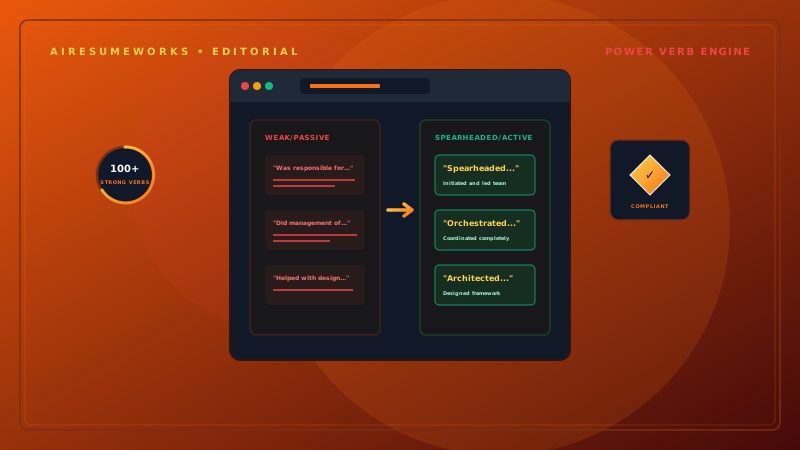
The words you use on your resume can make a significant difference in how clearly you communicate your experience. Strong action verbs can make your work experience more specific, demonstrate what you actually accomplished, and help prevent your resume from becoming a list of repetitive phrases.
Compare these two statements:
Responsible for managing a customer service team. and:
Managed a customer service team of 12 employees. The second version starts with a stronger action verb and immediately tells the reader what you did. Action verbs won't make weak experience magically impressive, but they can help you present your actual responsibilities and accomplishments more effectively.
What Are Resume Action Verbs?
Resume action verbs are words that describe an action you performed in a job, project, internship, volunteer position, or other experience. Examples include:
- Managed
- Created
- Developed
- Coordinated
- Analyzed
- Designed
- Improved
- Organized
- Trained
- Implemented
These words are especially useful at the beginning of resume bullet points. Instead of writing:
Responsible for training new employees. you can write:
Trained new employees on company procedures and customer service practices. The second version is more direct.
Why Are Action Verbs Important?
Action verbs help employers understand what you actually did. A resume filled with phrases such as:
- Responsible for
- Worked on
- Helped with
- Assisted with
- Involved in
can make your experience sound passive. Strong action verbs make your statements more direct. For example:
Helped with inventory management. could become:
Managed inventory records and monitored stock levels. The second statement provides a clearer description of the responsibility.
100+ Resume Action Verbs
Here are more than 100 action verbs you can use when writing or improving your resume.
- Leadership and Management
- Led
- Managed
- Directed
- Supervised
- Oversaw
- Coordinated
- Delegated
- Guided
- Mentored
- Trained
- Motivated
- Organized
- Administered
- Delegated
- Facilitated
- Headed
- Implemented
- Executed
- Planned
- Prioritized
These verbs can be useful when describing management responsibilities, team leadership, or organizational duties. Example:
Led a team of 15 employees and coordinated daily schedules to support business operations.
- Communication Action Verbs
- Communicated
- Presented
- Explained
- Negotiated
- Persuaded
- Advised
- Consulted
- Corresponded
- Documented
- Reported
- Wrote
- Edited
- Published
- Promoted
- Informed
- Collaborated
- Liaised
- Briefed
- Resolved
- Responded
These verbs can help describe customer service, presentations, writing, sales, public relations, and communication responsibilities. Example:
Presented monthly performance reports to senior management.
- Organization and Administration
- Organized
- Scheduled
- Arranged
- Maintained
- Processed
- Recorded
- Filed
- Tracked
- Monitored
- Updated
- Prepared
- Distributed
- Managed
- Coordinated
- Maintained
- Cataloged
- Audited
- Verified
- Reviewed
- Documented
These verbs are useful for administrative, office, records, scheduling, and operational positions. Example:
Coordinated schedules, maintained records, and processed customer documentation.
- Problem-Solving Action Verbs
- Resolved
- Analyzed
- Investigated
- Identified
- Evaluated
- Diagnosed
- Assessed
- Corrected
- Improved
- Troubleshot
- Addressed
- Solved
- Determined
- Tested
- Reviewed
These verbs can demonstrate your ability to identify problems and develop solutions. Example:
Identified recurring customer service issues and implemented process improvements to reduce complaints.
- Technology and Technical Skills
- Developed
- Programmed
- Configured
- Installed
- Tested
- Maintained
- Integrated
- Automated
- Designed
- Engineered
- Troubleshot
- Upgraded
- Optimized
- Built
- Programmed
These verbs can be useful for technology, engineering, software, IT, and technical positions. Example:
Configured computer systems and troubleshot hardware and software problems for employees.
- Sales and Business Development
- Sold
- Generated
- Increased
- Expanded
- Negotiated
- Acquired
- Converted
- Promoted
- Developed
- Retained
- Increased
- Closed
- Prospected
- Marketed
- Generated
These verbs can help describe sales, marketing, business development, and account-management experience. Example:
Generated new business through customer outreach and developed relationships with prospective clients.
- Financial and Analytical Action Verbs
- Analyzed
- Calculated
- Forecasted
- Evaluated
- Audited
- Budgeted
- Reconciled
- Reported
- Measured
- Projected
- Tracked
- Assessed
- Monitored
- Reduced
- Identified
These verbs can be useful when describing accounting, finance, budgeting, data analysis, or business operations. Example:
Analyzed monthly expenses and identified opportunities to reduce operating costs.
- Creative and Design Action Verbs
- Designed
- Created
- Developed
- Produced
- Illustrated
- Conceptualized
- Drafted
- Wrote
- Edited
- Published
- Composed
- Developed
- Built
- Curated
- Produced
These verbs can be useful for marketing, design, content creation, media, communications, and creative positions. Example:
Designed marketing materials and created digital content for promotional campaigns.
- Customer Service Action Verbs
- Assisted
- Supported
- Resolved
- Responded
- Advised
- Addressed
- Guided
- Served
- Educated
- Communicated
- Handled
- Processed
- Investigated
- Coordinated
- Followed up
These verbs can help describe customer-facing responsibilities. Example:
Resolved customer account issues and provided information about products and services.
- Operations Action Verbs
- Managed
- Coordinated
- Implemented
- Streamlined
- Improved
- Monitored
- Optimized
- Scheduled
- Processed
- Maintained
- Inspected
- Executed
- Operated
- Controlled
- Standardized
These verbs can be useful for operations, logistics, manufacturing, facilities, and management positions. Example:
Streamlined daily operating procedures to improve workflow and reduce processing delays.
- Education and Training Action Verbs
- Taught
- Trained
- Instructed
- Educated
- Mentored
- Coached
- Developed
- Facilitated
- Presented
- Evaluated
- Assessed
- Guided
- Demonstrated
- Prepared
- Advised
These verbs can describe teaching, employee training, coaching, and educational experience. Example:
Trained new employees on company procedures and customer service standards.
How to Choose the Right Action Verb
The strongest action verb depends on what you actually did. Don't choose a word simply because it sounds impressive. For example, if you participated in a project but didn't manage it, don't write:
Directed a major project. Instead, describe your actual contribution. You might write:
Coordinated project documentation and communicated progress updates to team members. The second statement is accurate while still showing useful experience.
Replace Weak Resume Phrases
One of the easiest ways to improve your resume is to replace passive phrases with direct action verbs. Instead of:
Responsible for managing inventory. Use:
Managed inventory and monitored stock levels. Instead of:
Responsible for answering customer questions. Use:
Responded to customer questions and resolved service issues. Instead of:
Worked on marketing campaigns. Use:
Supported marketing campaigns by creating promotional content and tracking campaign results. Instead of:
Helped train employees. Use:
Trained new employees on workplace procedures and customer service standards. The goal isn't simply to replace words. The new statement should clearly explain your actual contribution.
Combine Action Verbs With Results
Action verbs become more powerful when they're combined with specific results. For example:
Improved customer service procedures. is useful, but it doesn't explain what happened. If you have a legitimate measurable result, you could write:
Improved customer service procedures, reducing average response time by 20%. The result gives the employer additional context. Other measurable results might include:
- Revenue increased
- Costs reduced
- Processing time decreased
- Customer satisfaction improved
- Sales increased
- Number of customers served
- Employees trained
- Projects completed
- Accounts managed
Don't invent numbers simply because a measurable result looks better. If you don't have a specific number, describe the improvement accurately without adding unsupported statistics.
Avoid Repeating the Same Action Verb
Using the same verb at the beginning of every bullet point can make your resume repetitive. For example:
Managed customer accounts. Managed customer complaints. Managed customer records. Managed customer communications. You may be able to vary the wording:
Managed customer accounts. Resolved customer complaints. Maintained customer records. Coordinated customer communications. The objective isn't to use a different verb in every sentence regardless of meaning.
Choose the most accurate verb for each responsibility.
Don't Force Strong Verbs Into Every Sentence
Not every resume bullet needs to sound dramatic. The purpose of an action verb is to communicate your work clearly. Using an unnecessarily powerful word can make a simple responsibility sound exaggerated.
For example, if you answered customer phone calls, saying you "orchestrated customer communications" would probably be less clear than simply saying:
Responded to customer inquiries by phone and email. Clear language is more valuable than complicated language.
Use Job Description Language When Appropriate
Job descriptions often contain specific terminology related to the position. Review the job posting and identify terms that accurately describe your experience.
For example, if a job requires candidates to "coordinate projects," and you have genuinely coordinated projects, using the word "coordinated" on your resume can make your experience easier to recognize.
Don't copy the job description word-for-word. Instead, use relevant terminology naturally when it accurately describes your background.
Action Verbs for Accomplishments
When describing accomplishments, consider verbs that communicate improvement, growth, or results. Examples include:
- Increased
- Improved
- Reduced
- Expanded
- Accelerated
- Strengthened
- Streamlined
- Optimized
- Saved
- Achieved
- Generated
- Delivered
- Exceeded
- Completed
- Improved
For example:
Reduced customer response times by improving the support request process. This communicates both the action and the result.
Use Different Verbs for Different Types of Experience
Your choice of action verbs should reflect your profession. A software developer may use words such as:
Developed, programmed, tested, integrated, deployed, optimized. A sales professional may use:
Generated, negotiated, acquired, closed, expanded, retained. An administrative professional may use:
Coordinated, scheduled, organized, processed, maintained, prepared. A manager may use:
Led, supervised, directed, delegated, trained, implemented. Using terminology that accurately reflects your field can make your resume more specific.
Action Verbs Don't Replace Good Resume Content
Strong verbs are useful, but they aren't enough by themselves. Compare:
Improved operations. with:
Improved daily scheduling procedures to reduce scheduling conflicts and improve employee coverage. The second bullet provides much more information. A good resume bullet should ideally communicate:
What you did + what you worked on + the result when relevant
For example:
Coordinated employee schedules for a 20-person team, ensuring adequate coverage during peak business hours. The action verb "coordinated" is helpful, but the rest of the sentence provides the context.
Review Your Resume for Weak Language
After writing your resume, look through your work experience section. Highlight phrases such as:
- Responsible for
- Worked on
- Helped with
- Assisted with
- Involved in
- Duties included
- Participated in
Then ask whether each phrase can be replaced with a more direct description of what you actually did. You don't have to eliminate every occurrence. Sometimes "assisted" or "supported" is the most accurate word.
The goal is to make your contributions clearer, not to make every bullet sound exaggerated.
Use Action Verbs to Make Your Resume More Direct
Strong action verbs can make a resume easier to scan and help employers understand your experience more quickly. Choose verbs that accurately describe what you did, vary them when appropriate, and combine them with specific responsibilities or accomplishments.
Most importantly, don't choose a word simply because it sounds impressive. A resume is strongest when the language is clear, specific, and supported by your actual experience.
When action verbs are combined with relevant skills, accurate details, and measurable accomplishments when available, they can turn a basic list of job duties into a much clearer description of the value you brought to your previous roles.