Resume Examples With No Experience: How to Write Your First Resume
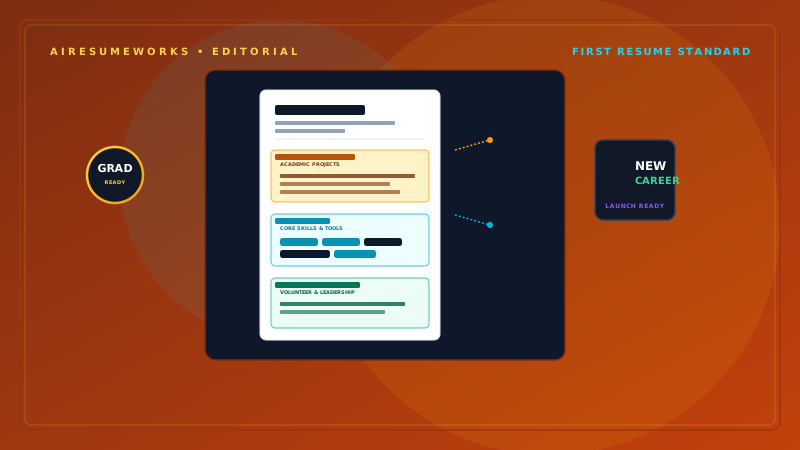
Writing your first resume can feel difficult when you do not have a long employment history. You may wonder what to include, how to fill the page, and what employers will want to see when you have little or no professional experience.
The good news is that you do not need years of employment history to create a strong entry-level resume. A first resume can highlight your education, skills, projects, volunteer experience, internships, part-time work, certifications, and other experiences that demonstrate your ability to contribute in a workplace.
The key is to focus on what you can offer, rather than focusing on what you do not have.
What Counts as Experience on a First Resume?
Professional employment is only one type of experience. You may already have useful experience from:
- School projects
- Internships
- Volunteer work
- Part-time jobs
- Freelance work
- Student organizations
- Community activities
- Personal projects
- Certifications
- Training
- Temporary work
For example, someone applying for an entry-level administrative position may have developed useful skills through a school organization where they scheduled meetings, maintained records, and communicated with members.
That experience can demonstrate organization and communication even if the person has never held an administrative job.
Start With Your Contact Information
Place your basic contact information at the top of the resume. Include:
- Full name
- Phone number
- Professional email address
- City and state
- LinkedIn profile, if appropriate
You generally do not need to include your full street address. Make sure your email address is professional. An address based on your name is usually a better choice than one containing nicknames, jokes, or other informal language.
Write a Strong Introduction
When you have limited experience, the introduction can help explain what you bring to the position. You can use either a professional summary or, in some cases, a resume objective.
For example:
Recent high school graduate with strong communication, organization, and customer service skills. Experienced in volunteer activities and school projects requiring teamwork, scheduling, and problem solving. Seeking an entry-level position where these skills can contribute to a professional team.
The introduction should be specific to the type of position you want. Avoid vague statements such as:
Hardworking person looking for a good job. That does not tell an employer anything useful about your qualifications. Example: First Resume for a High School Graduate
A recent high school graduate may have limited traditional employment experience. A resume could be organized like this:
JORDAN MILLER Atlanta, GA | (404) 555-0145 | jordan.miller@email.com
PROFESSIONAL SUMMARY
Recent high school graduate with strong communication, organization, and teamwork skills. Experienced in volunteer activities, school projects, and customer-facing responsibilities. Quick learner seeking an entry-level position in a professional environment.
EDUCATION
- High School Diploma
- North Atlanta High School — Atlanta, GA
- 2026
SKILLS
- Customer Service
- Communication
- Teamwork
- Organization
- Microsoft Word
- Google Docs
- Time Management
VOLUNTEER EXPERIENCE
- Community Food Bank Volunteer
- Atlanta, GA | 2025–2026
Organized donated food items for distribution. Assisted visitors and answered basic questions. Worked with other volunteers to prepare weekly distribution areas.
SCHOOL PROJECTS
Business Presentation Project
Worked with a team to research a business topic. Prepared presentation materials and delivered information to classmates. Helped organize project responsibilities and deadlines.
This type of resume focuses on real experience rather than trying to make the applicant appear more experienced than they are. Example: Resume for a College Student
College students can use education, projects, internships, campus activities, and part-time employment. For example:
ALEX MARTIN Atlanta, GA | (404) 555-0178 | alex.martin@email.com
PROFESSIONAL SUMMARY
Business administration student with experience in customer service, team projects, and administrative tasks. Strong organizational and communication skills with working knowledge of Microsoft Office. Seeking an entry-level administrative position.
EDUCATION
- Bachelor of Business Administration
- Georgia State University — Atlanta, GA
- Expected 2027
SKILLS
- Microsoft Excel
- Microsoft Word
- Customer Service
- Data Entry
- Teamwork
- Organization
- Presentation Skills
WORK EXPERIENCE
- Sales Associate
- ABC Retail — Atlanta, GA
- 2025–Present
Assist customers with product questions and purchases. Maintain organized merchandise displays. Process transactions and handle customer concerns. Work with team members to complete daily store responsibilities.
ACADEMIC PROJECT
Business Research Project
Researched industry trends using multiple sources. Analyzed information and prepared a written report. Presented findings to a class of approximately 25 students.
Even a part-time retail position can provide transferable skills. Example: Resume With No Traditional Work Experience Some applicants may genuinely have no employment history.
In that situation, education, projects, volunteer work, and skills can become more prominent. For example:
TAYLOR BROWN Chicago, IL | (312) 555-0185 | taylor.brown@email.com
OBJECTIVE
Motivated recent graduate seeking an entry-level customer service position. Strong communication, problem-solving, and organizational abilities developed through academic projects and volunteer activities.
EDUCATION
- Associate Degree in Business Administration
- City College — Chicago, IL
- 2026
PROJECTS
Customer Service Research Project
Researched common customer service challenges. Developed recommendations for improving customer communication. Presented findings as part of a group project.
VOLUNTEER EXPERIENCE
- Community Center Volunteer
- Chicago, IL | 2025–2026
Assisted visitors with basic questions. Helped organize community events. Maintained organized supplies and activity materials.
SKILLS
- Customer Service
- Communication
- Microsoft Office
- Organization
- Problem Solving
- Teamwork
The resume does not pretend that the applicant has professional experience. Instead, it shows evidence of useful abilities.
Include Part-Time Jobs
Do not automatically dismiss part-time employment simply because it is not directly related to your desired career. Jobs such as:
- Retail associate
- Restaurant employee
- Cashier
- Receptionist
- Delivery driver
- Tutor
- Babysitter
can demonstrate valuable transferable skills. For example, a retail employee may have experience with:
- Customer service
- Cash handling
- Communication
- Inventory
- Teamwork
- Problem solving
Those skills can be relevant to many entry-level positions.
Use Volunteer Experience
Volunteer work can provide meaningful resume content. Instead of simply writing:
Volunteer at local food bank. Explain what you actually did. For example:
Assisted with weekly food distribution, organized supplies, helped visitors, and worked with volunteers to prepare distribution areas. This gives an employer a better understanding of your responsibilities.
Include Relevant School Projects
School projects can demonstrate practical abilities. Consider projects involving:
- Research
- Writing
- Presentations
- Data analysis
- Programming
- Business planning
- Marketing
- Design
- Team collaboration
Describe what you actually did. For example:
Developed a basic website using HTML and CSS as part of a school technology project. That provides evidence of a technical skill even without professional employment.
Include Certifications and Training
If you have completed relevant certifications or training, include them. Examples might include:
- First Aid/CPR
- Google certifications
- Microsoft certifications
- CompTIA certifications
- Industry training
- Technical courses
Only include credentials you have actually completed or earned. If a course is still in progress, identify it as such rather than implying that you have already received the certification.
Focus on Transferable Skills
Transferable skills are abilities that can be useful across different jobs. Examples include:
- Communication
- Organization
- Customer service
- Teamwork
- Problem solving
- Time management
- Leadership
- Research
- Writing
- Technology
However, do not simply create a huge list of soft skills. Whenever possible, demonstrate them through actual experience. For example:
Instead of:
Leadership
Use:
Coordinated responsibilities for a four-person school project and helped the team meet the presentation deadline. That provides evidence of the skill.
Use Strong Resume Bullet Points
Weak bullet points often describe activities without explaining what the applicant contributed. For example:
Helped with events. A stronger version might be:
Assisted with community events by organizing supplies, greeting participants, and helping maintain event schedules. The second statement gives the employer more useful information.
Use action verbs such as:
- Assisted
- Organized
- Created
- Coordinated
- Managed
- Prepared
- Researched
- Presented
- Supported
- Communicated
Choose verbs that accurately describe what you actually did.
Do Not Invent Experience
When people have limited experience, there can be a temptation to exaggerate. Avoid doing this. Do not claim:
- Management experience you do not have
- Certifications you have not earned
- Software expertise you do not possess
- Professional accomplishments that never happened
- Job responsibilities you never performed
A resume can be strong without exaggeration. Employers understand that entry-level candidates may have limited professional experience.
Use a Simple Resume Format
Your first resume does not need a complicated design. A clean structure might be:
Name and Contact Information
Summary or Objective
Education
Skills
Experience
Projects
Volunteer Experience
Certifications
You do not need every section. Use the sections that contain useful information. If you have no certifications, leave that section out. If you have extensive volunteer experience, give it more space.
Education May Come Before Experience
For someone with little professional experience, education can appear near the top of the resume. For example:
Contact Information
Professional Summary
Education
Skills
Projects
Experience
Volunteer Experience
As your professional experience grows, your work history may become more important and eventually move higher on the page.
Keep the Resume Focused
A lack of experience does not mean you need to fill the resume with unnecessary information. Avoid adding:
- Irrelevant hobbies
- Long personal stories
- Unrelated activities
- Excessive descriptions
- Every class you have taken
- Every minor accomplishment
Choose information that supports your application. Quality is more important than filling the page.
Tailor Your First Resume to the Job
A general resume can be useful, but tailoring it to individual positions can make it more relevant. Suppose you are applying for a customer service position.
The job description may mention:
- Customer service
- Communication
- Problem solving
- Computer skills
If you genuinely have those abilities, make them visible in your resume. For example:
Skills
- Customer Service
- Communication
- Problem Solving
- Microsoft Office
Then demonstrate those skills through your experience.
Use Keywords Carefully
Keywords can also matter on entry-level resumes. Look at the job description for terms that describe the employer's requirements. If the job asks for:
Microsoft Excel experience
and you have used Excel in school or work, include Microsoft Excel specifically. If you have never used Excel, do not add it simply because it appears in the posting.
Accuracy always comes first.
Keep Your First Resume Easy to Read
Your resume should be easy for someone to scan quickly. Use:
- Clear headings
- Consistent fonts
- Professional spacing
- Standard bullet points
- Short paragraphs
- Logical organization
Avoid excessive graphics and complicated layouts. A simple resume can look highly professional when the information is organized well.
Proofread Carefully
Errors can be especially noticeable on a first resume. Check:
- Name
- Phone number
- Email address
- School name
- Employer names
- Dates
- Spelling
- Grammar
- Punctuation
- Formatting
Read the final document slowly rather than relying entirely on spell-checking software. Also make sure your email address and phone number are correct.
Ask Someone to Review It
If possible, have another person review your resume before submitting it. A teacher, career counselor, mentor, trusted professional, or experienced family member may notice problems you missed.
You can also use online resume checkers or AI tools for another perspective. However, you should still make the final decisions about what information accurately represents you.
Don't Apologize for Having No Experience
Your resume does not need to say:
I have no experience. Instead, show the experience you do have. Education, volunteer work, projects, part-time employment, training, and personal projects can all provide evidence of useful skills.
The employer already understands that an entry-level candidate may not have years of professional experience. Your job is to demonstrate potential and relevant abilities.
A First Resume Can Grow With Your Career
Your first resume does not need to remain your resume forever. As you gain experience, you can gradually replace less relevant information with stronger professional accomplishments.
For example:
First Resume
Education
Volunteer work
School projects
Part-time employment
Later Resume
Professional summary
Relevant work experience
Career accomplishments
Skills
Certifications
Education
Your resume should evolve as your career develops. Creating a first resume is not about trying to make yourself look like an experienced professional. It is about presenting the experience and abilities you already have in the strongest accurate way possible.
Use education, projects, volunteer work, internships, part-time employment, certifications, and transferable skills to demonstrate what you can contribute. Focus on specific responsibilities and accomplishments instead of vague descriptions, tailor the resume to the position, and keep the formatting clean and easy to read.
Even without years of employment history, a well-organized resume can show employers that you have useful skills, relevant experience, and the ability to learn and contribute in a professional environment.